Market Research Guide

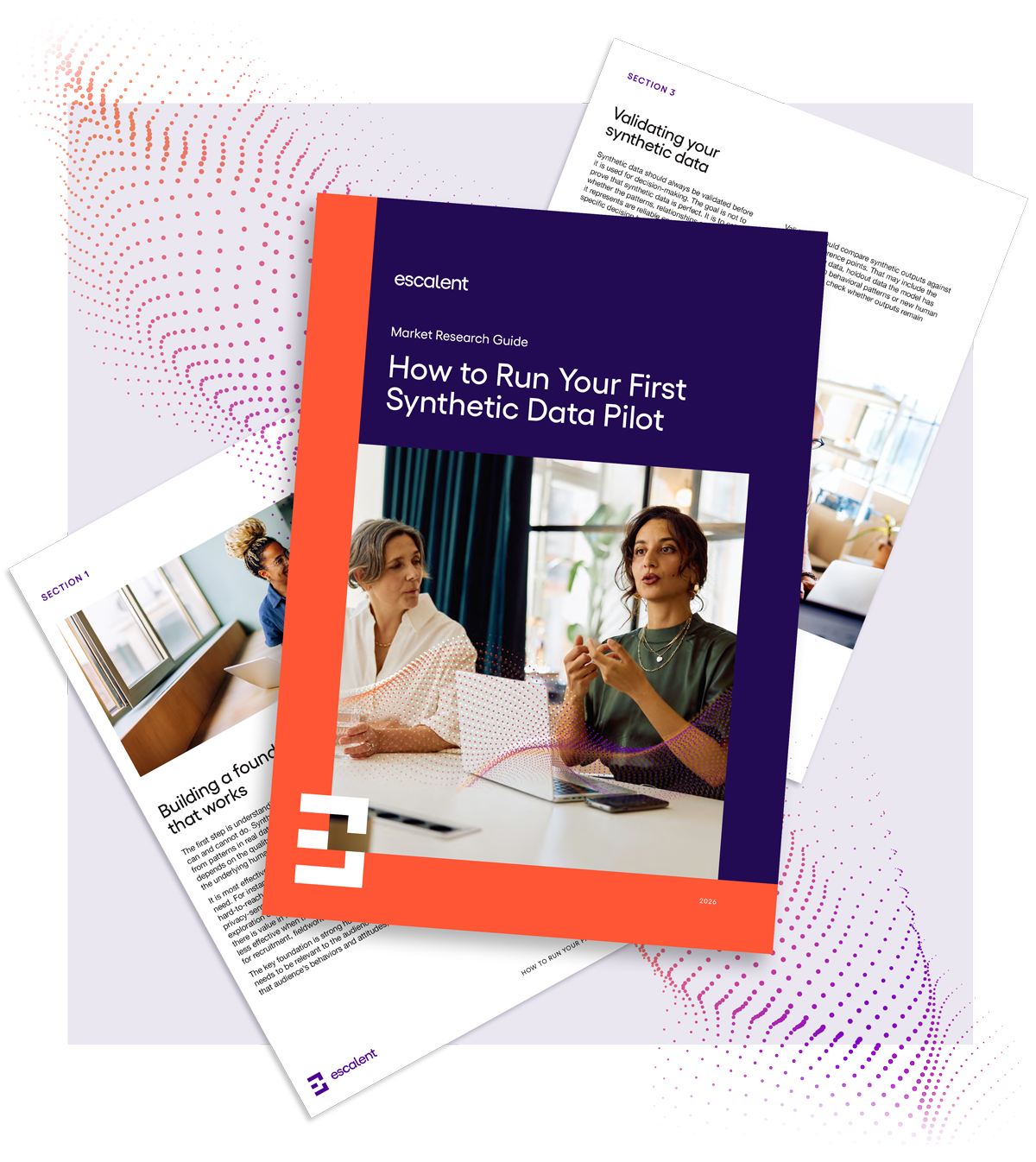
How to Run Your First Synthetic Data Pilot


A practical guide to choosing the right use case, designing a hybrid study, validating synthetic data and building a pilot you can trust.


Synthetic data can create meaningful value in market research—but only when it is applied with clear purpose, strong human data, thoughtful research design and rigorous validation.

The right starting point is not “How can we use synthetic data?” It’s “Where could synthetic data extend the value of existing research?” A good first pilot should show where synthetic data improves confidence, creates new possibilities or saves time, and where its limitations become clear.

Drawing on lessons from Escalent’s synthetic data pilots, this guide provides a practical framework for running your first synthetic data pilot. Learn how to identify the right use case, keep real human data at the center of your study, validate synthetic outputs, evaluate potential partners and turn an initial experiment into evidence your organization can use.

Get the Guide + Pilot Checklist

Synthetic data approaches

3 main synthetic data approaches

sample augmentation, digital twins and conversational personas

Levels of validation

4 levels of validation

single-variable distributions, two-way/multi-way relationships, multivariable relationships and overall similarity

12 questions

12 questions

to ask before beginning your first synthetic data pilot
What's inside?


Building on Escalent's Practical Guide to Synthetic Data in Market Research blog series, this guide brings the key principles together—from choosing the right use cases and grounding synthetic methods in human data to designing hybrid studies and validating outputs—and takes the next step: putting those principles into practice through your first synthetic data pilot.

You’ll learn:

  • How to identify synthetic research use cases where the method can meaningfully extend existing market research
  • Why strong, relevant and recent human data is essential for grounding synthetic outputs
  • How to design a hybrid research study that intentionally combines real human data with synthetic methods to extend, not replace, traditional research
  • What robust validation should look like before using synthetic outputs for decision-making, including checks against key relationships and behavioral patterns
  • How to evaluate synthetic data partners by asking the right questions about methodology, limitations, validation, security and support
  • How to structure your first synthetic data pilot around a focused business question—and document what you learn for future studies
  • The 12 questions to ask before you launch your first synthetic data pilot
Synthetic Data Pilot Market Research Guide

Study Highlights

Synthetic data is generated from patterns in real datasets, which means its usefulness depends on the quality, relevance and structure of the underlying human data.
Validation should compare synthetic outputs against real-world reference points, including training data, holdout data, known behavioral patterns or new human research.
A strong first pilot should focus on the audience, questions and relationships that matter most to the business decision. It should not try to model everything.
The goal of a first pilot is not to prove synthetic data can replace traditional research. It is to understand where synthetic methods can extend the value of human data, where they introduce risk and what standards are needed before they can be used with confidence.

Get the Guide + Pilot Checklist

It only takes a few moments.

Return to top